 Invest
— Invest · 6 years ago
The Markets Are Sending Confounding Messages
The Federal Reserve is having a major impact on market prices and by default warps and deforms traditional signals that markets send.
719 results found
Invest
The Federal Reserve is having a major impact on market prices and by default warps and deforms traditional signals that markets send.
 Invest
“Volatility” is a pedestrian word on Wall Street. Traders, investors, and the media throw it around as if everyone understands its financial definition. What matters, of course, is outcome
 PRO BLOG
The probability is 100% the markets for 13 of the world’s largest GDP ranked countries, including the U.S., reached their post-crash highs
 Invest
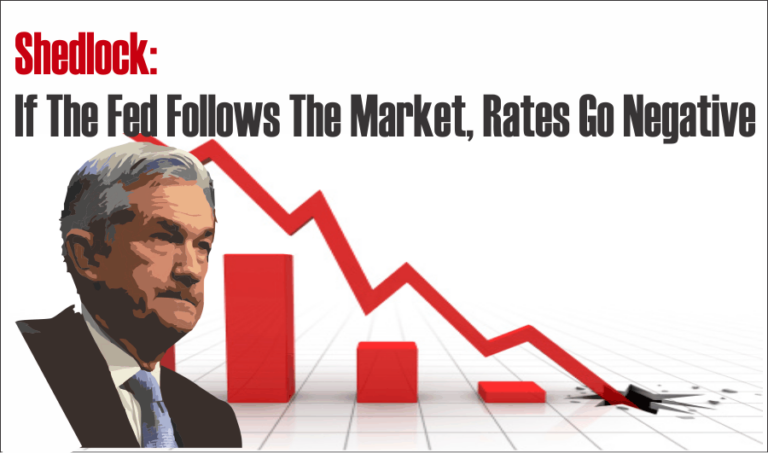
If the Fed really does follow the market, then negative rates are almost assured. However, even though the market pared back bets on negative interest rates, questions still persist.
 Invest
You would think that with the U.S. taking out a top Iranian commander, threats of military action flying between the U.S. and Iran, not to mention the "Selective Service" website crashing over concerns of World War III, the markets would be in full "sell" mode. If you thought that would be the case, you were wrong.
 Newsletter
In last week's Bull Bear Report, I warned that a "Meta-style reaction" to this week's mega-cap earnings could push the S&P 500 below its 100-day average and back toward the September lows. Alphabet delivered that reaction on Thursday. Intel finished the job on Friday. The S&P 500 fell 1.8% on Friday to close at 7,580, its lowest close since September 16, and ended the week down 0.6%. On Friday alone, the Nasdaq Composite dropped 2.9%, and the Dow lost 1.1%.
 Daily Market Commentary
S&P 500 companies have been the marginal buyer of US stocks for a decade. Stock buybacks reached a record $1.020 trillion in the twelve months through September 2025, accounting for roughly 60% of all cash returned to shareholders. That tailwind has had a big impact on returns. If we decompose the S&P 500 return from […]
Newsletter
The headline reason for this week’s tech rout was Meta. The company beat earnings estimates, then reported its first cash outflow in more than a decade as AI spending outpaced cash inflows. It also announced a two-for-one split and will issue non-voting shares to help fund the buildout. The stock fell 7% on Thursday, and the Philadelphia semiconductor index dropped 6.7%. The Nasdaq Composite had its worst day since early June. Friday added oil to the pile, with Brent settling at $116.72, a six-month high. The S&P 500 finished the week at 7,623.68, down 0.4% and its second straight weekly loss. The Dow, oddly enough, gained about 1.4%.
Newsletter
The market sold off hard to finish the week. The S&P 500 fell 1.09% on Friday to 7,659.44, closing the week down 1.95%, its worst week since June. The Nasdaq Composite fared worse, dropping 2.15% Friday and 4.48% for the week. Meanwhile, the Dow eked out a 0.67% weekly gain, and the Russell 2000 lost 3.05%. That split tells you most of what you need to know about what happened: there was a continued rotation from growth and risk to value and safety.