
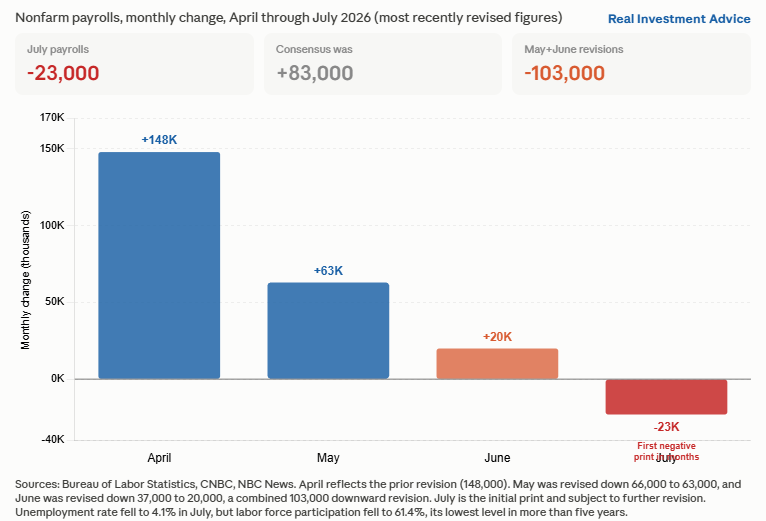
The Friday BLS employment report showed the economy lost 23k jobs. Along with last Wednesday’s ADP report (+44k), the two reports suggest the spring pickup in job growth is stalling. Adding to the bad news, the BLS revised May and June jobs down by a combined 103k jobs. The labor market has now averaged a mere 20k net job growth per month over the last three months.
Despite the drop in payrolls, the BLS unemployment rate ticked down to 4.1% from 4.2%. While the decline is good, the reason it fell isn’t. Labor force participation fell to 61.4%, its lowest level in more than five years, meaning the rate declined because people left the workforce, not because hiring picked up.
The rate hike debate just took a serious hit. Markets had been pricing 80%+ odds of a September hike after Warsh’s hawkish tone and the prolonged oil-driven inflation scare. Friday’s negative BLS payroll print with the downward revisions makes that case far harder to sustain. Citigroup economists have been arguing the Fed’s equation would shift once the unemployment rate began rising meaningfully. The most recent BLS report, even with the rate technically falling on a participation quirk, is the kind of data that may reopen the door for market participants to think about rate cuts rather than hikes.
What To Watch This Week
Earnings

Economy

Market Trading Update
The S&P 500 finished at 7,757.64, up 3.6% on the week and at a record close. The index sits 3.5% above its 50-day moving average near 7,488 and 10.0% above a rising 200-day average near 7,045. RSI(14) closed at 66.0, which is firm but still shy of the 70 overbought threshold. MACD remains above its signal line with the histogram widening to +3.3.

What happened here matters more than the level, and I want to reiterate an analysis from this past week because of its importance.
From early June, the market did not fall, but went sideways. This is crucial to understand because an overbought tape corrects one of two ways. It can either drop in price or work off the excess over time. This current cycle chose time. Eight weeks of chop reset momentum without breaking the trend. Tuesday’s record close at 7,736.52 confirmed buyers had finally absorbed the overhead supply. Friday extended it on the jobs print, and volume confirmed the move rather than contradicting it. That is what separates a real breakout from a squeeze.
So the obvious question is whether you chase a market at record highs. History argues against the fear. Going back a decade, we count eleven prior cases where the S&P broke to a new high after at least two months without one.

The downside is what surprises people. The worst 12-month outcome in that group was a 2.8% dip, compared with a 21% drawdown for the worst year following a random day since 2016. Carson Group’s work dates back to 1957, and it lands in the same place: stocks are higher a year after a new high roughly 71% of the time. New highs beget new highs FAR more often than they ring the bell at the top.
None of that even remotely suggests abandoning discipline. We are extended, and the markets are not cheap. The index runs 10% above its 200-day average into a historically soft August-to-October window, and breadth is thinning again. In our equity models, we are staying long the trend and holding cash for the pullback that eventually arrives. If you are trying to add money into the markets, do that on weakness toward the 50-day, not on strength into round numbers.
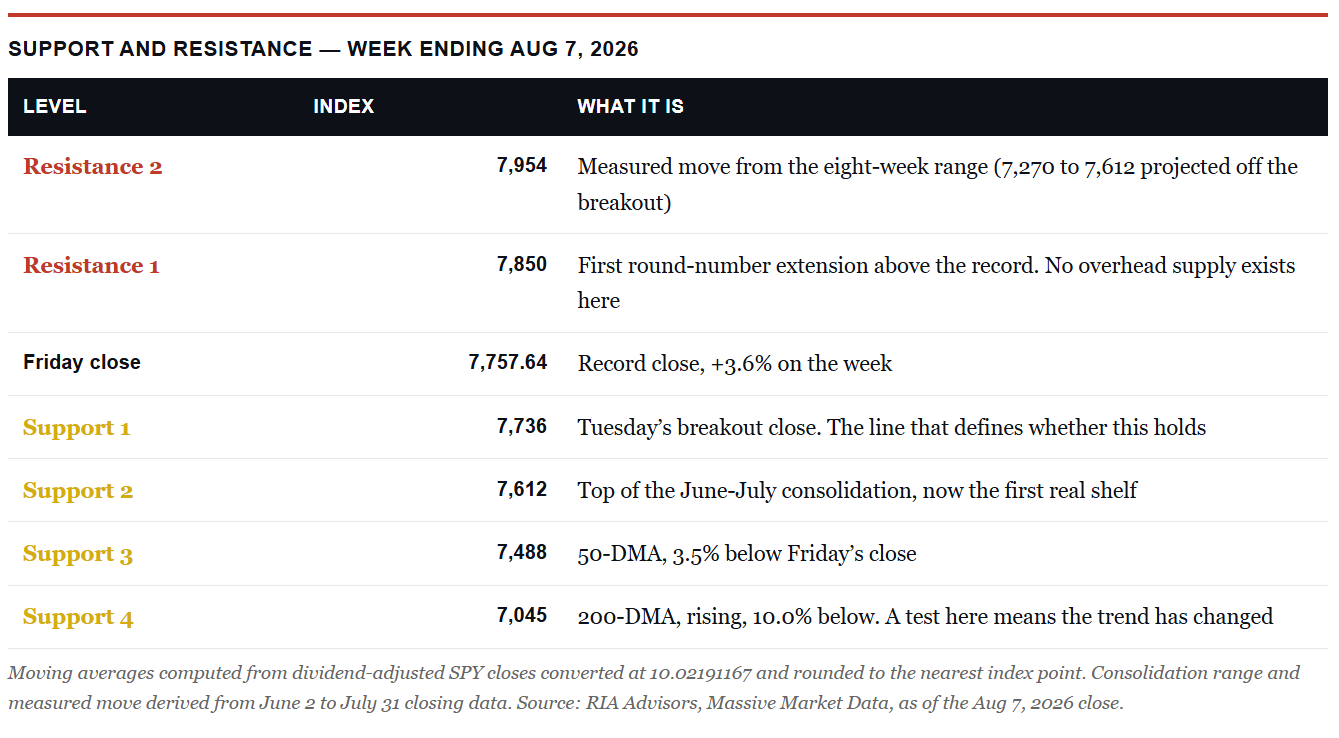
The level that matters is 7,736.52. That was Tuesday’s breakout close, and a decisive move back below it would turn this from a confirmed breakout into a fail

The Week Ahead
With the weak BLS report dampening the odds of a September rate hike, traders will be looking at this week’s CPI and PPI reports for more evidence as to what the Fed may do. The CPI and PPI headline rates are both expected to show a small 0.1% gain. Those follow -0.4% and -0.3% respectively last month. Assuming the data come in at or below estimates, the Fed’s case for hiking rates will be greatly diminished.
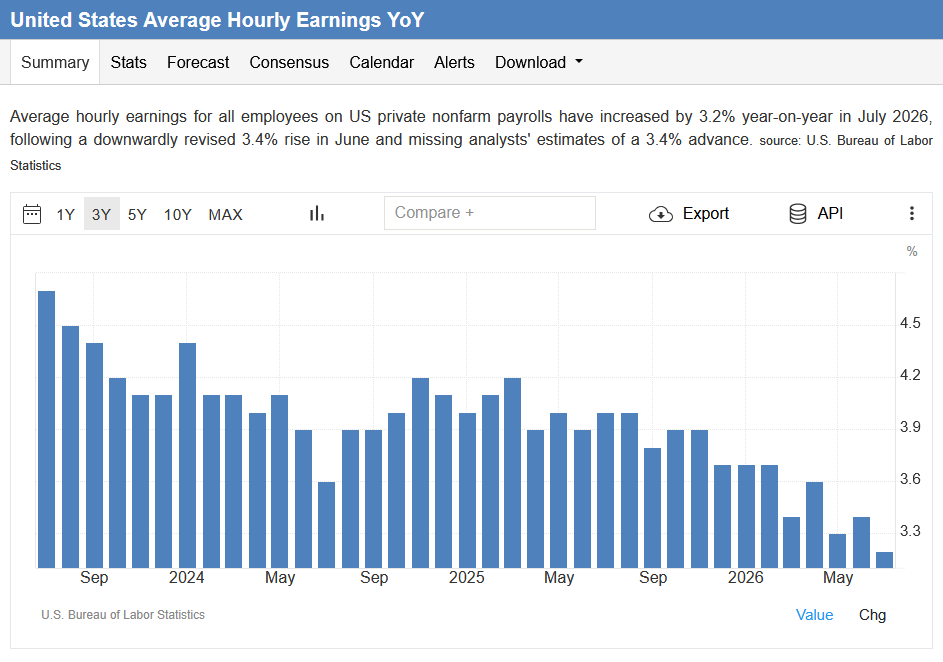
Retail Sales on Friday will be interesting as wage growth continues to decline, as shown below. Last month’s retail sales were relatively weak compared to the prior four months. Based in part on weak wage growth in the BLS report, estimates are for a small 0.1% increase. This too would support the case to avoid a rate hike.
Sound Money: Be Careful What You Wish For
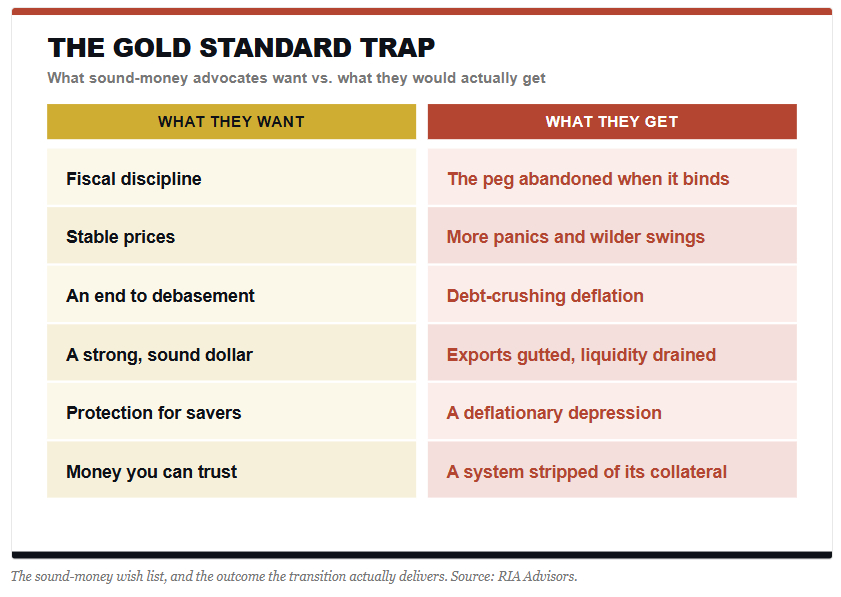
A return to sound money has become the rallying cry for a growing crowd of investors, politicians, and commentators who are, understandably, fed up. Fed up with deficits that never shrink, with a national debt north of $39 trillion, with a dollar that buys a little less every year. The pitch is elegant. Back the dollar with gold again, and you force Washington to live within its means. I get the appeal. I’ve spent years in these pages warning about the debt and deficit trajectory myself. But there’s a problem with the prescription, and it’s a big one.
The problem is NOT the diagnosis, which is largely correct. The problem is the medicine: applied to a $30 trillion economy wired the way ours is, it would likely trigger the very collapse it claims to prevent. Let me walk through why.

Tweet of the Day

New UPDATED Trading Rules With Desktop Printout
“Want to achieve better long-term success in managing your portfolio? Here are our 15-trading rules for managing market risks.”
Please subscribe to the daily commentary to receive these updates every morning before the opening bell.
If you found this blog useful, please send it to someone else, share it on social media, or contact us to set up a meeting.