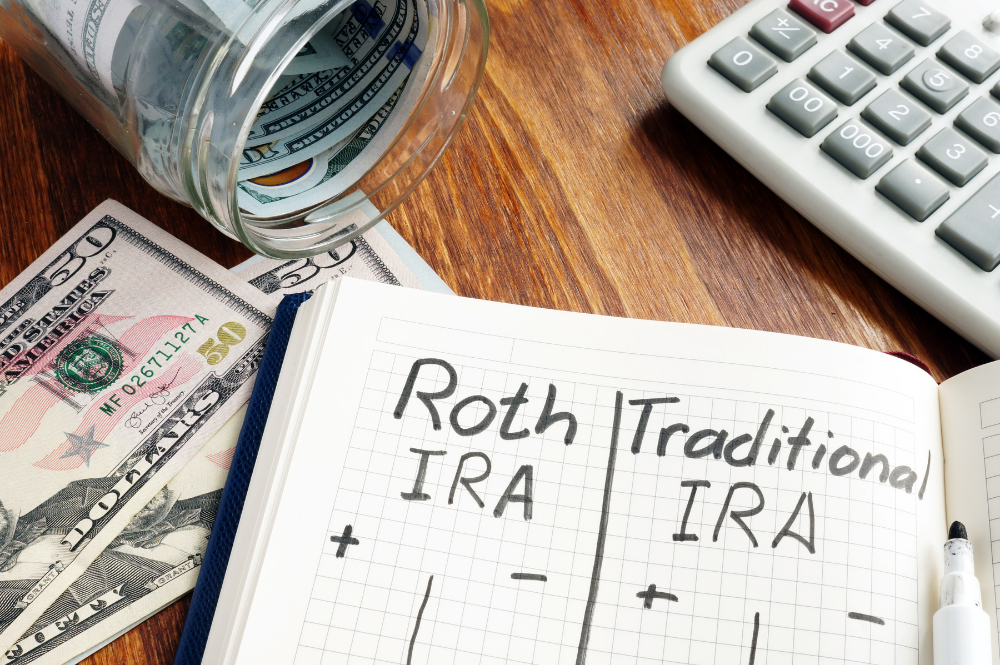
When planning for retirement, choosing the right Individual Retirement Account (IRA) is a crucial decision. Traditional and Roth IRAs are two popular options, each with distinct advantages and limitations. Understanding the differences between traditional vs Roth IRA accounts will help you make an informed decision based on your financial situation and retirement goals.
Contribution Limits
Both Traditional and Roth IRAs share the same annual contribution limits set by the IRS:
- For 2024, individuals under 50 can contribute up to $7,000 per year.
- Individuals aged 50 and older can contribute an additional $1,000 as a catch-up contribution, totaling $8,000 annually.
While these limits are the same for both account types, Roth IRAs have income restrictions. If your Modified Adjusted Gross Income (MAGI) exceeds certain thresholds, your ability to contribute to a Roth IRA may be reduced or eliminated.
Tax Implications
One of the biggest differences between Traditional and Roth IRAs lies in how they are taxed.
Traditional IRA
- Contributions: Tax-deductible for eligible individuals, reducing your taxable income in the year of contribution.
- Withdrawals: Taxable as ordinary income during retirement.
- Best for: Individuals who expect to be in a lower tax bracket during retirement, as they can defer taxes until they withdraw the funds.
Roth IRA
- Contributions: Made with after-tax dollars, so there’s no immediate tax benefit.
- Withdrawals: Qualified withdrawals in retirement are tax-free, including both contributions and earnings.
- Best for: Individuals who expect to be in a higher tax bracket during retirement, as they can enjoy tax-free income later.
Withdrawal Rules
The withdrawal rules for Traditional and Roth IRAs are significantly different, particularly when it comes to required minimum distributions (RMDs) and early withdrawal penalties.
Traditional IRA
- Required Minimum Distributions (RMDs): Begin at age 73, requiring you to withdraw a minimum amount each year.
- Early Withdrawals: Subject to a 10% penalty and income taxes if taken before age 59½, unless an exception applies.
Roth IRA
- No RMDs: There’s no requirement to withdraw funds during your lifetime, making it an excellent option for estate planning.
- Early Withdrawals: Contributions (but not earnings) can be withdrawn at any time without taxes or penalties, providing flexibility.
Suitability for Different Financial Situations
Choosing between a Traditional and Roth IRA depends on your current financial situation, expected future income, and retirement goals.
Traditional IRA
- Ideal for individuals seeking an immediate tax break.
- Best suited for those who anticipate being in a lower tax bracket during retirement.
- A good choice if you’re unsure of your future tax situation and want to defer taxes.
Roth IRA
- A great option for younger individuals or those early in their careers, as their current tax rate is likely lower.
- Provides flexibility with no RMDs and penalty-free access to contributions.
- Suitable for those who expect their income or tax rate to increase over time.
Making the Right Choice
When deciding between a Traditional and Roth IRA, consider factors like your income, current tax bracket, expected retirement tax bracket, and need for flexibility. Consulting a financial advisor can help you evaluate your situation and choose the IRA that aligns best with your long-term goals.
Take Control of Your Retirement Savings
Deciding between a Traditional and Roth IRA is an important step in building a secure financial future. Both account types offer valuable benefits, but understanding their differences ensures you maximize your retirement savings.
At RIA Advisors, we specialize in helping individuals make smart financial decisions tailored to their unique needs. Contact us today to get expert guidance on planning for your retirement.