
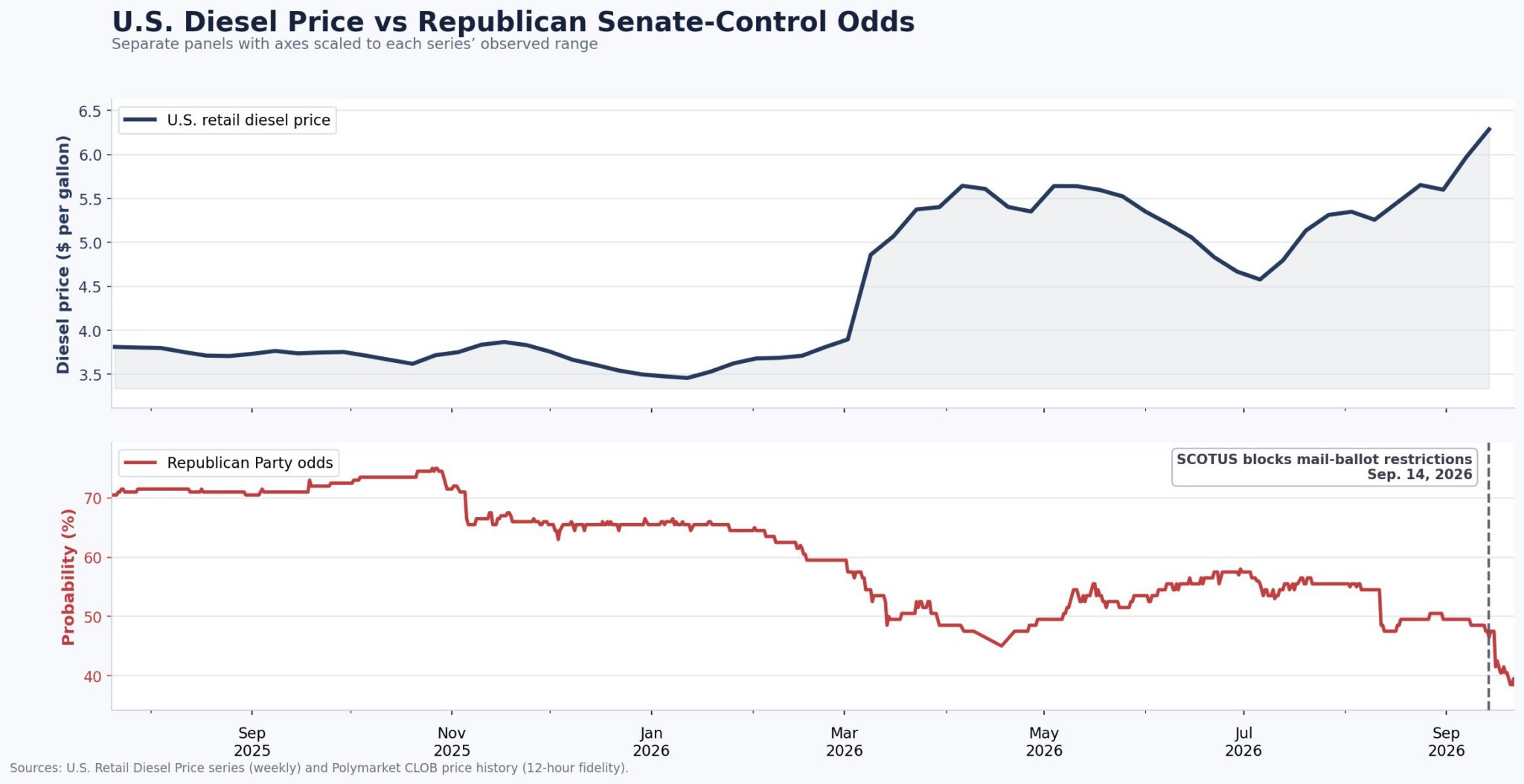
Media speculation about a possible agreement between Iran and the US often focuses on President Trump’s incentives to end the war. In particular, high gasoline and diesel prices are creating real political pressure heading into the midterms, as we share below. Thus, the reasoning goes that Trump may cave to political pressure to reduce energy prices and enter into a peace agreement. While that argument has merit, the framing is incomplete. Iran’s incentive to come to terms is arguably stronger.
The IMF projects Iran’s economy will contract by 6.1% in 2026, with inflation running over 70%. Iran’s Statistics Organization has reported even higher annual inflation rates. Food inflation is also a problem, with Iran’s reported fruit prices up 75% and bread and grains nearly doubling. The Iranian currency, the rial, trades at 2.3 million per dollar, against a state-administered rate of roughly 1.675 million. For context, a year earlier the rial traded near 600,000. That spread between the street rate and the state-administered rate shows that the central bank can’t manage the currency.
While Iran’s economic statistics are dire, it may be able to withstand the pressure for a while, as they are somewhat used to sanctions. Iran has absorbed economic sanctions and high inflation for most of the last five decades. While we complain about $4+ gasoline and some higher prices for related goods, our economy remains strong. The Iranian people are paying a much dearer price for the war, one that in time will likely get their leaders to capitulate or citizens to revolt.
What To Watch Today
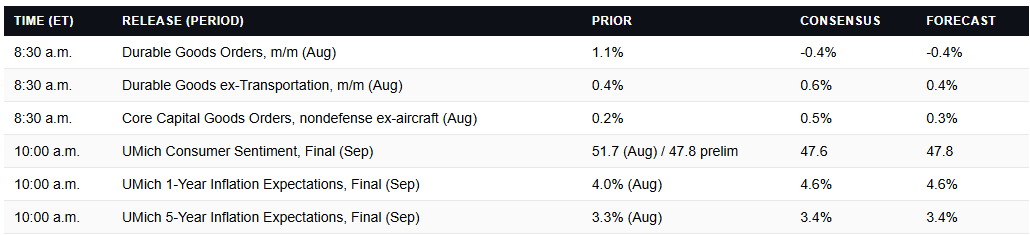
Earnings

Economy
Market Trading Update
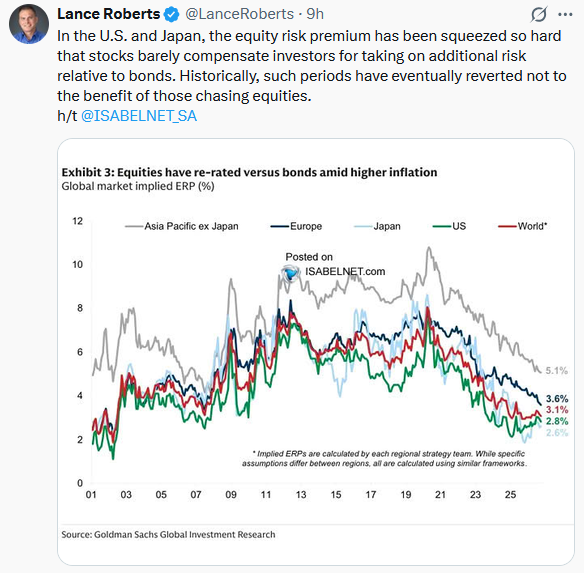
Yesterday, we discussed the setup for a bond short squeeze, with CTAs holding the largest duration shorts since April. Today, I want to look at what that same rates move is doing to the equity risk premium, because stocks haven’t priced it yet.
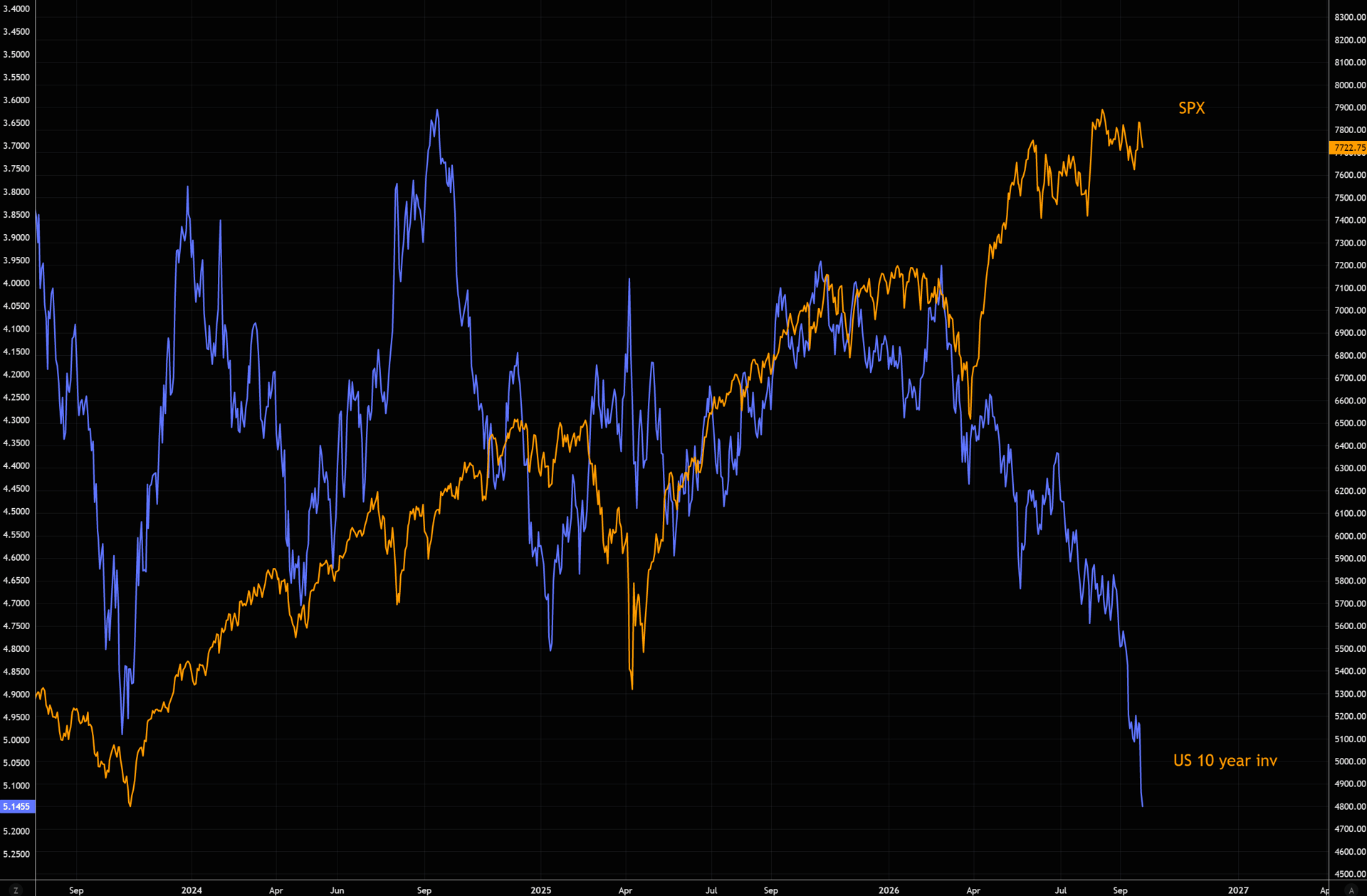
Earlier this week, we reviewed Nomura’s 9,000 target for the S&P 500. The earnings assumptions are aggressive, but the bigger risk is NOT earnings. It’s the discount rate. On Wednesday, the 10-year Treasury closed at 5.11%, the highest since 2007. The S&P 500 slipped just 0.8% to 7,706. Notice in the chart below how wide the gap between stocks and inverted yields has become.
Here’s the math. FactSet puts the forward P/E at 19.1, which implies forward earnings near $400. That’s an earnings yield of about 5.2% against a risk-free 5.11% on the 10-year. Investors are getting paid roughly 8 basis points to own stocks rather than Treasuries. Such is the price of “certainty” about AI-driven earnings growth.
A bull would counter that earnings will simply grow into the valuation. They might. Consensus expects 15.2% growth in 2027, which lifts forward earnings toward $461. Yet even that only gets the index to about 8,877 at today’s yields. Hitting 9,000 requires the 10-year to fall back near 5.0%. If yields instead push to 5.5%, the next major level The Market Ear flags, fair value on current earnings drops to roughly 7,170. That’s about 7% below Wednesday’s close.
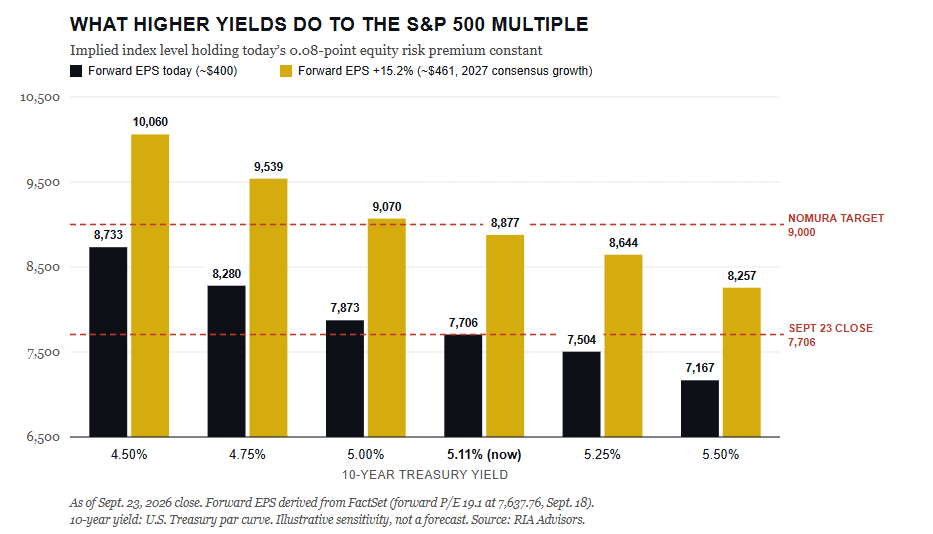
Equity risk premium sensitivity: implied S&P 500 level at each 10-year yield, holding today’s premium constant. As of Sept. 23, 2026. Source: RIA Advisors, FactSet, U.S. Treasury.
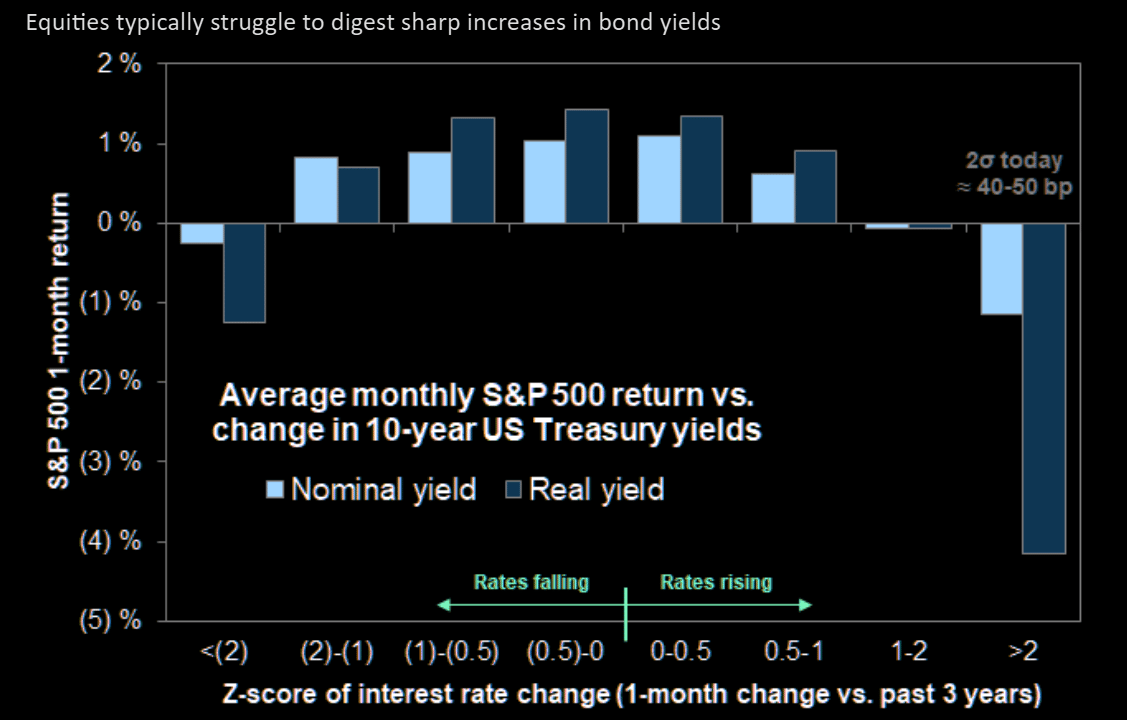
Speed matters as much as level. Goldman notes that equities tend to struggle once the 10-year yield completes a two-standard-deviation move, roughly 30 basis points in two weeks or 50 basis points in a month. We’re close. The 10-year is up 28 basis points since September 9 and 37 basis points since August 21. The damage is already showing up where rates bite first. The Russell 2000 fell 1.8% on Wednesday, more than twice the S&P 500’s decline.
We have often quoted Bob Farrell’s Rule #9, which says that when all the experts and forecasts agree, something else tends to happen. Right now, all the experts agree on earnings, but very few are stress-testing the discount rate.
Don’t build a portfolio that needs 9,000 to work. Rebalance equity exposure back to target weights, trim the long-duration growth names most sensitive to rates, and keep cash on hand. On the bond side, the math now favors adding duration in stages near 5%, as we noted yesterday. The bond market doesn’t need to crash for stocks to crash. It only needs to keep offering the same return without the risk.
Meta Jumps On Muse, Its AI Agent
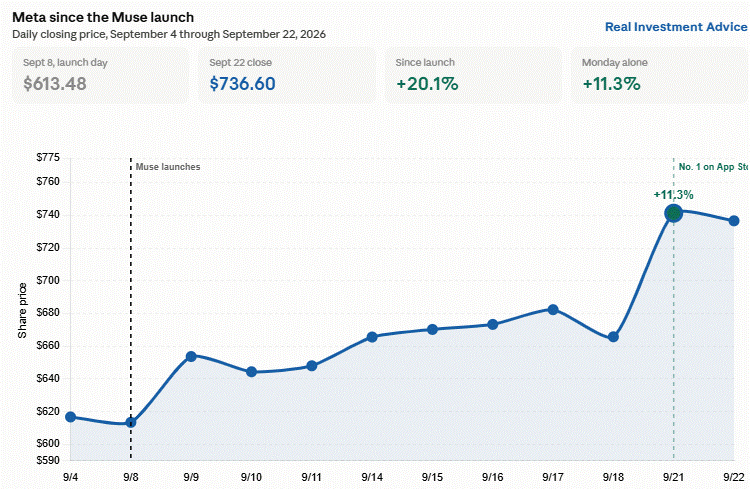
Meta gained over 10% on Monday after launching Muse, its personal AI agent. Almost instantly, it reached number one on Apple’s U.S. App Store. The stock is up 20% since the launch. Per The Wall Street Journal, Truist Bank projects Muse could generate $28.5 billion of incremental revenue by 2030, and analyst Youssef Squali observed that “the narrative around Meta has been changing.”
Its impact on other companies is worth noting. For example, on the day of the announcement, Charles Schwab fell 6.1%. JPMorgan fell 3.4%, Bank of America 3%, and American Express 2.6%. The Journal reported the selloff across wealth managers, brokerages, and banks reflected fears that AI agents will disrupt financial services. That said, Muse’s path is unsettled. Amazon blocked it from shopping on its site over unauthorized access. There is also a trust issue with AI agents. Per the WSJ, an Oppenheimer survey found that only 8% of consumers would trust Meta with their passwords, against 30% for Google. Analysts expect OpenAI and Google to offer competing agents within weeks.
Muse’s two and a half million downloads in two weeks are phenomenal. While we have yet to see its impact on the economy, it shows that AI revenue is starting to spread beyond data center buildout and AI model usage fees. It also shows how quickly the market will reprice an incumbent once a credible agent appears, which is why Schwab fell harder than other banks. Whether Meta’s Muse can hold an advantage is a separate question, but the disruption is being felt.

Tweet of the Day
New UPDATED Trading Rules With Desktop Printout
“Want to achieve better long-term success in managing your portfolio? Here are our 15-trading rules for managing market risks.”
Please subscribe to the daily commentary to receive these updates every morning before the opening bell.
If you found this blog useful, please send it to someone else, share it on social media, or contact us to set up a meeting.