



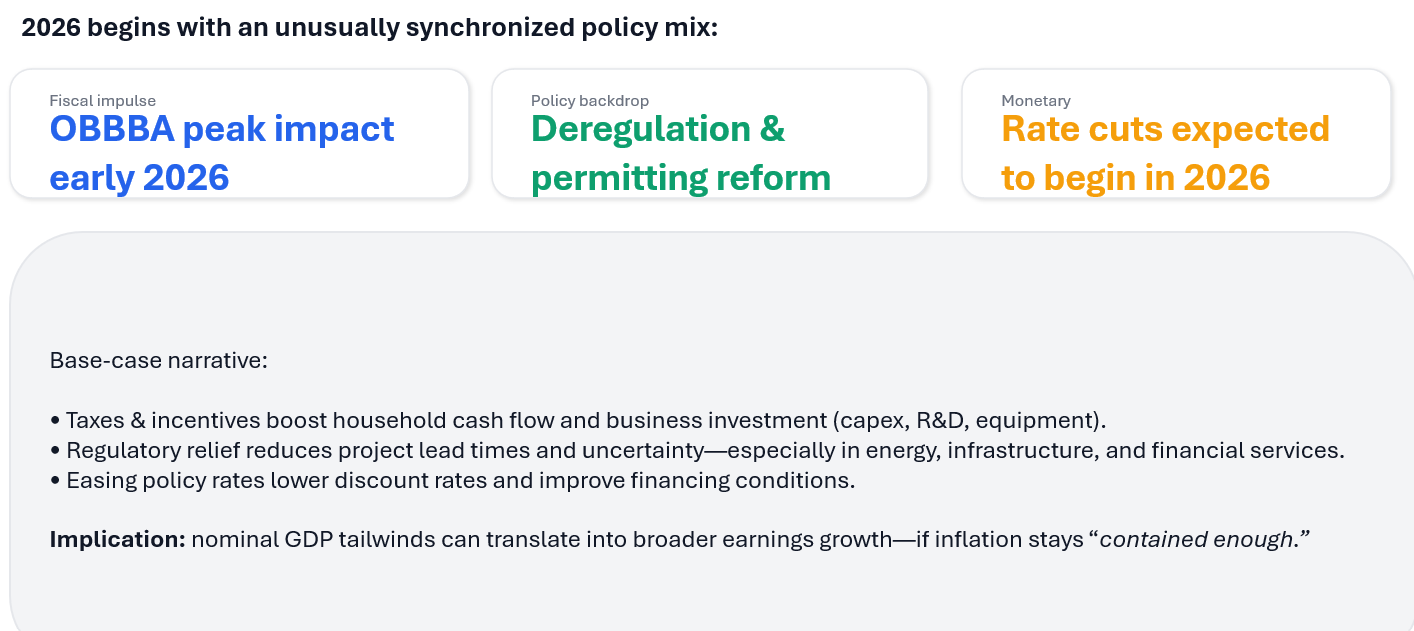
The market got off to a strong start in 2026, with investors chasing industrials, materials, and commodity-related stocks as the reflation narrative gained traction. The “reflation narrative” is the belief that a range of policies will boost the rate of economic growth in the U.S. without triggering inflation. As I discussed at our recent 2026 Investment Summit, the markets are banking on the effects of the passage of the OBBBA, tax cuts, and deregulation to fuel earnings and profit growth in 2026.

Furthermore, the markets are focused on the Federal Reserve with expectations of further rate cuts and easing of monetary policy. All of these actions aim to increase consumption, investment, and employment, which in turn will increase wages and corporate revenues.
Over the last few months, the reflation narrative has re-emerged. After years of tightening by global central banks to tame post-pandemic inflation, the focus has started to shift. Inflation has moderated in the U.S., and growth remains positive, albeit soft in some sectors. Policymakers and market participants are watching for signs that rate cuts could soon be back on the table, particularly as employment softens.
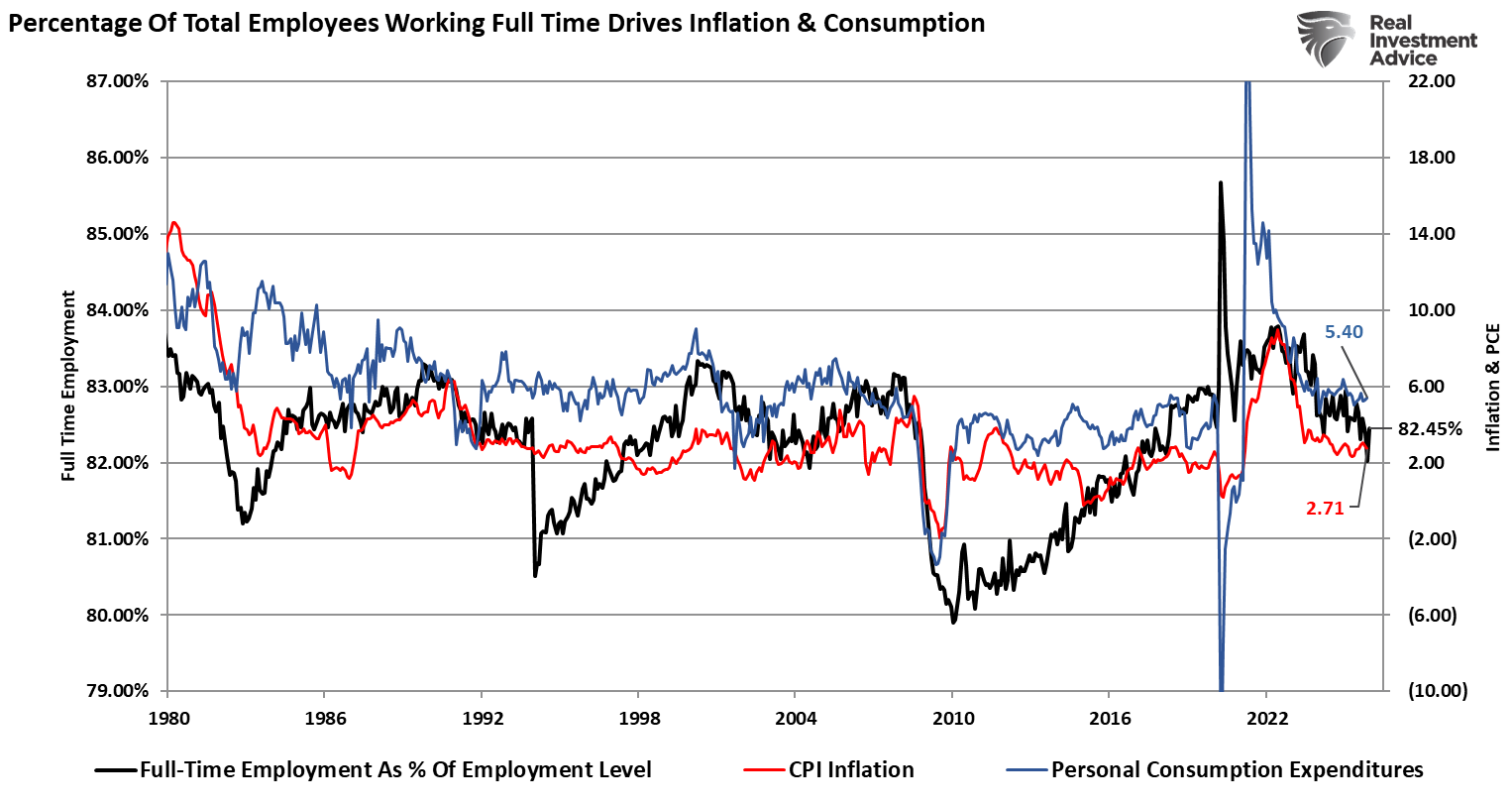
Wall Street strategists and economists are optimistic. They argue that the worst of the inflation fight is over and believe central banks will continue to ease as economic growth stabilizes while inflation edges closer to its targets. In turn, they expect this will feed into earnings growth and a further expansion of profit margins.

The bull case for reflation is rooted in falling inflation, positive real wage growth, continued fiscal support, and a resilient labor market. These factors suggest that consumer demand will remain stable or even improve if borrowing costs fall. The combination of lower interest rates and improving consumption sets the stage for rising corporate revenues and higher stock market valuations.
Several recent data points support the reflation view:
- U.S. headline inflation dropped from 9.1% in mid-2022 to 2.7% by the end of 2025.
- Real wage growth has turned positive lifting household purchasing power.
- The unemployment rate remained close to 4%, signaling continued labor market strength.
- Fiscal policy remains expansive, with the U.S. running deficits near 6% of GDP.
- The Fed has stopped hiking and begun cutting rates.
If these trends hold, the reflation narrative gains credibility. However, there is also a risk that a resurgence of economic growth leads to inflation and interest rates rising, which could undermine an already overvalued market. In this post, we will examine the bull and bear cases for the reflation narrative and discuss how to navigate them.

Bull Case for Reflation and Growth
As noted above, the reflation narrative rests on three key arguments: the OBBBA impact, deregulation and reform, and rate cuts.
The byproduct of those impacts is that corporate earnings should accelerate. Analyst forecasts for S&P 500 earnings in 2026 are expected to increase by double digits for the bottom 493 stocks, which follows negative to muted growth in 2023, 2024, and 2025.
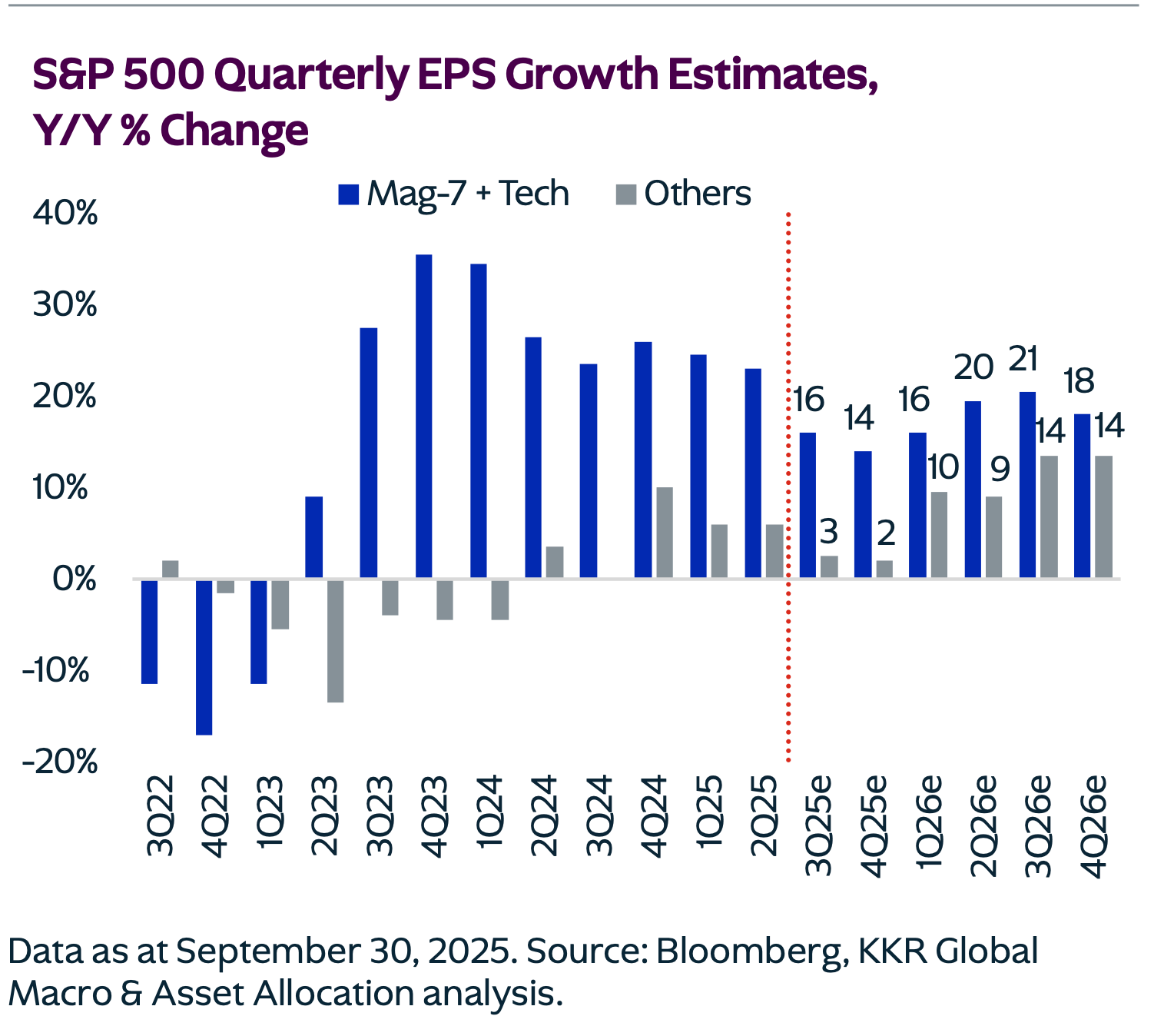
Furthermore, the hope is that if inflation cools and input costs stabilize (i.e., reduced employment), companies may expand margins further, as noted above. Sectors such as technology, materials, industrials, and consumer discretionary should lead the way.
While the U.S. consumer remains resilient, credit card delinquencies are rising but still below historical peaks. Given that personal consumption accounts for nearly 70% of GDP, it is real disposable incomes that are the link to the growth story. The hope is that incomes will rise, even if employment declines, thanks to increases in productivity.
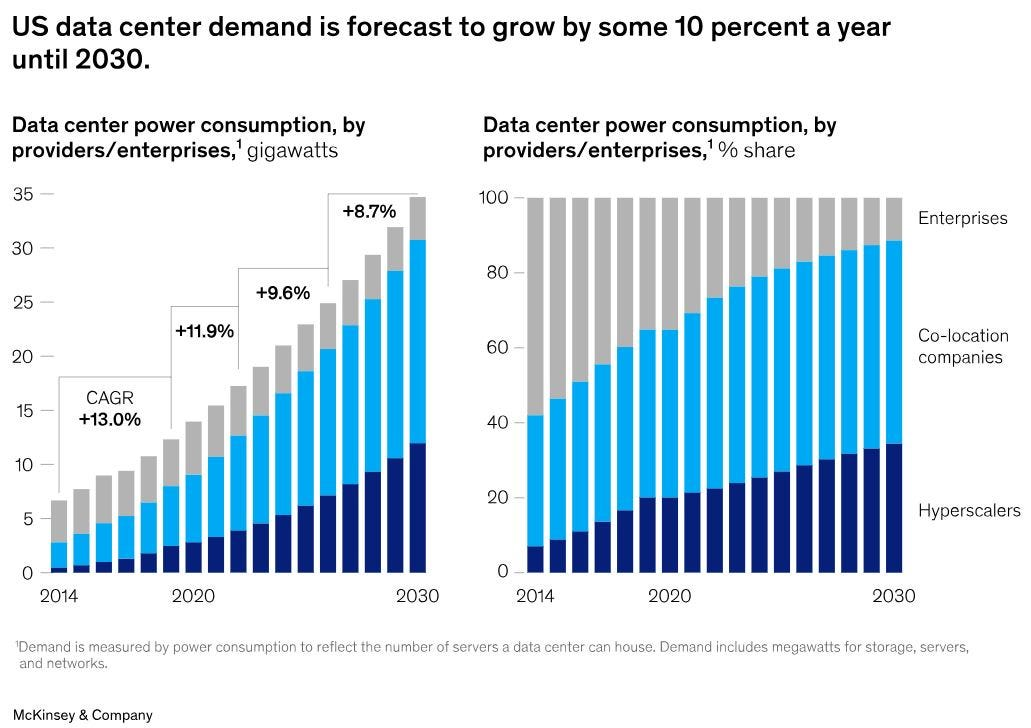
Lastly, fiscal spending continues at high levels. For now, deficit spending combined with private sector investment (i.e., data center buildout), supports the reflation narrative. In 2026
If these conditions persist, reflation becomes a self-reinforcing cycle.
Growth picks up => Earnings rise => Market valuations hold or expand.
In turn:
Investor sentiment improves => Asset prices rise => Wealth creation feeds consumption.
If the reflation narrative holds, leadership remains in cyclicals, industrials, financials, and materials. Technology can benefit too, especially from falling discount rates. As future cash flows are valued more attractively, growth stocks could continue to rally.
However, there is a fly in the ointment to be aware of.
Bear Case That Could Derail Reflation
If the reflation narrative comes to fruition, as expected, strong economic growth will require increased demand. That increased demand will be reflected in rising wages and higher commodity prices, which will translate into a rise in inflation. In other words, it is difficult to get “reflation” without also getting “inflation.”
For the markets, if inflation does not stay contained, the Fed may not ease as markets expect. In fact, rate cuts could be delayed or reversed, which would derail the reflation setup.
Key risks include:
- Services inflation remains sticky.
- Rent and shelter components lag and could re-accelerate.
- Oil prices rise on geopolitical shocks.
- Labor markets remain tight, which drives wage inflation.
If inflation expectations rise, bond yields would move higher. That would hurt valuations for both stocks and real estate. Higher long-term rates would tighten financial conditions and reduce the stimulus effect. For now, inflation expectations remain anchored to slower economic growth, but if that reverses, so should expectations.
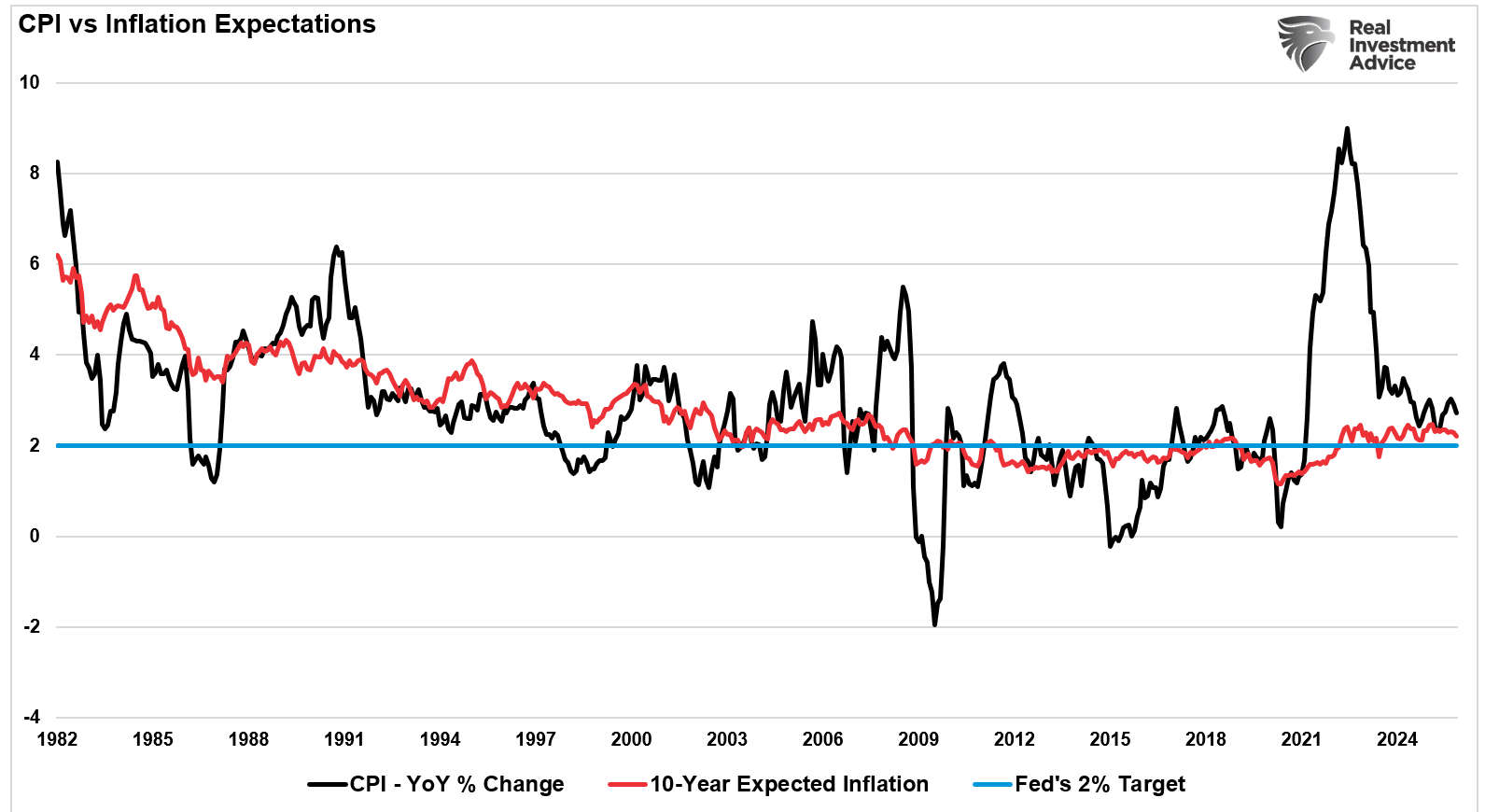
Another major risk is global weakness. China’s economy remains fragile, characterized by low confidence and significant debt overhangs. Europe faces stagnant growth and energy insecurity. In the event of a global slowdown, which is a likely possibility, such a scenario would reduce demand for exports, lower corporate profits, and put pressure on U.S. manufacturing.
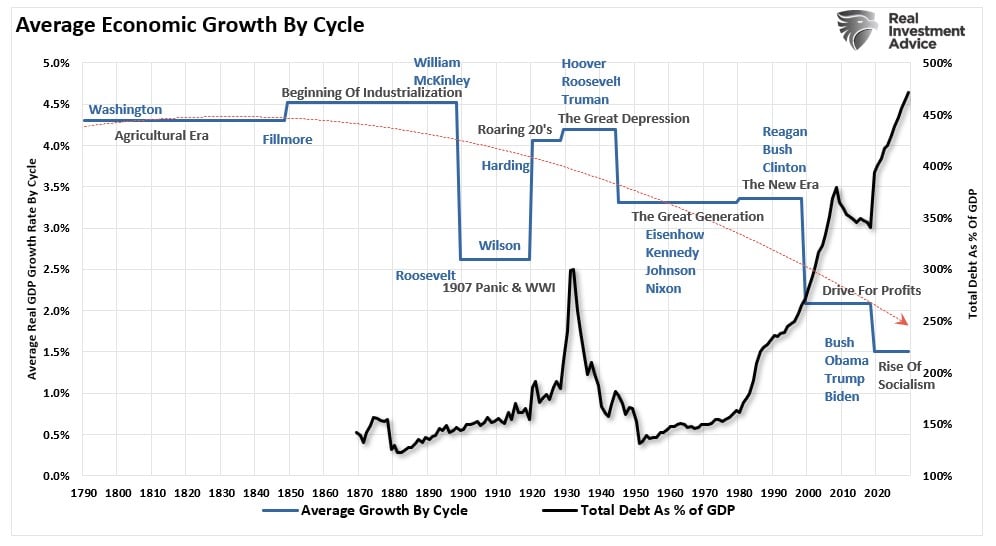
Furthermore, while the current debt and deficit levels are nowhere near a “crisis” level, they are at levels that reduce economic growth as non-productive debt diverts revenues from growth. As Stuart Sparks of Deutsche Bank noted previously:
“History teaches us that although investments in productive capacity can in principle raise potential growth and r* in such a way that the debt incurred to finance fiscal stimulus is paid down over time (r-g<0), it turns out that there is little evidence that it has ever been achieved in the past.
Rising federal debt as a percentage of GDP has historically been associated with declines in estimates of r* – the need to save to service debt depresses potential growth. The broad point is that aggressive spending is necessary, but not sufficient. Spending must be designed to raise productive capacity, potential growth, and r*. Absent true investment, public spending can lower r*, passively tightening for a fixed monetary stance.”
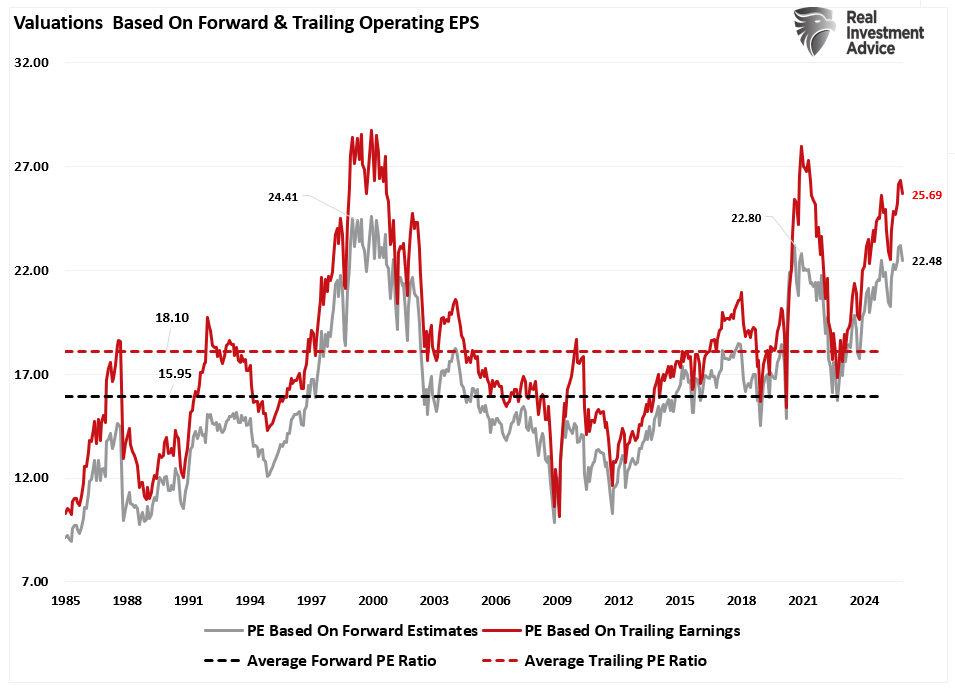
Of course, we would be remiss not to mention that stock market valuations remain elevated. The S&P 500 trades at a price-to-forward-earnings ratio of approximately 22x. At such levels, it is difficult not to question whether the reflation narrative has already been priced into the current market. If that is the case, and earnings disappoint, or rates remain high, a valuation correction could occur.
Given the bull and bear case for the reflation narrative, what should investors do?

Investor Tactics for an Uncertain Path
Our expectation is that we may see a mix of both scenarios in 2026. A bullish narrative in the first half, but disappointment during the second half. As such, investors should prepare for multiple scenarios. The key is to stay flexible and risk-aware. Tactical allocation can help manage through different macro regimes.
Recommended actions:
- Diversify across asset classes. Hold stocks, bonds, and cash.
- Within equities, favor companies with strong balance sheets and pricing power.
- Look at cyclical sectors for reflation exposure: financials, industrials, materials.
- Consider real assets as inflation hedges: REITs, infrastructure, and commodity funds.
- Use TIPS or inflation-protected bonds to guard against price spikes.
- Hold some short-term treasuries or high-quality bonds in case of slowdown.
Watch key data points:
- Inflation prints (CPI, PCE)
- Wage growth and employment trends
- Central bank communications
- Corporate earnings revisions
- Yield curve shape and credit spreads
Avoid over-concentration in momentum trades. If reflation falters, volatility will return quickly. Maintain liquidity to capitalize on market dislocations.
Conclusion
Reflation is a credible but fragile narrative. It depends on inflation falling, rates declining, and growth stabilizing. If these factors align, reflation can lift earnings and asset prices. But risks remain high. Inflation could return, geopolitics could worsen, or global demand could slip.
Investors must be cautious and prepared. Avoid betting on a single outcome. Manage risk, stay diversified, and follow the data. The path ahead is uncertain, but opportunities exist for those who stay alert and disciplined.